Not all the news coming out of the Gulf is bad for Iran's beleaguered rulers.
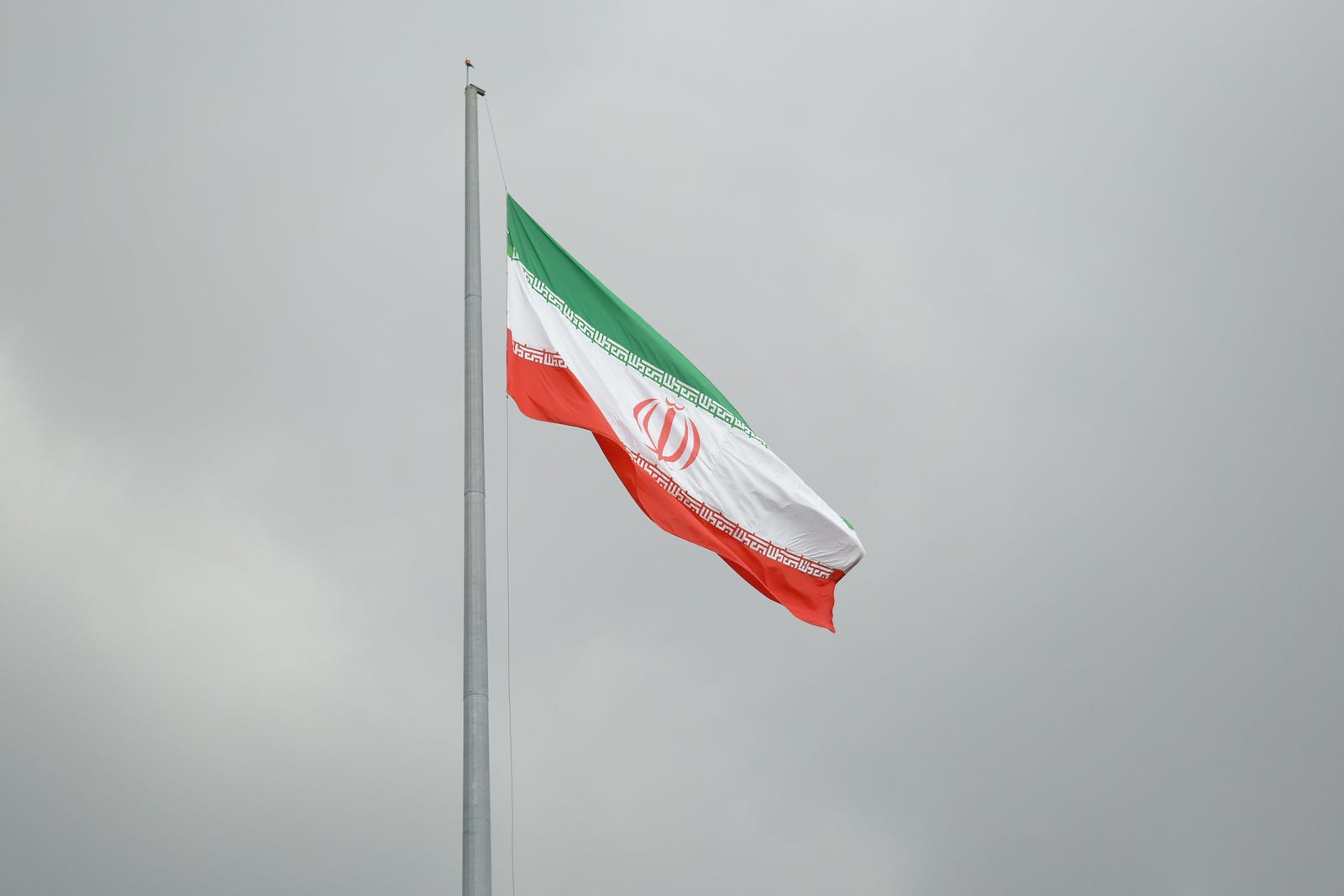
Many analysts don’t expect the Iranian regime to last much longer. Indeed, some are saying that a regime change has already been achieved in Iran.
Not all the news is good for the U.S. and Israel, however. It’s hard to get a good read on what is going on within Iran through its state-controlled media. But is Iran stronger than we think?
It is tempting to look at Iran’s battered economy, the airstrikes, the succession turmoil, and the visible damage to the regime’s prestige and conclude — not without reason — that the Islamic Republic is simply finished. There is certainly evidence of deep weakness.
But there is another possibility, and it perhaps deserves more attention than it gets. Iran may not be stronger in the sense of being healthier, richer, or more stable. It may, however, be more durable, more opaque, and more dangerous than the collapse narratives suggest. Recent coverage from inside Iran and from Western intelligence reporting points to a regime that is under enormous pressure but still very capable of surviving by hardening itself, narrowing power further into the hands of the security state, and leaning on outside help.
The first thing to understand is that survival and strength are not the same thing. A dictatorship can be weak in ordinary ways and still be formidable in the ways that matter most during war.
Iran’s civilian economy is hurting. Civilian life is strained. But the institutions that actually preserve regime survival are not fashion businesses, private-sector employers, or middle-class optimism. They are the Revolutionary Guards, the Basij, the intelligence services, and the machinery of fear.
Recent reporting describes exactly that: checkpoints in and around major cities, a widening crackdown, and heavy efforts to prevent any postwar unrest before it begins. That is not a confident government. But it is a government still very much in the fight.
That matters because, unfortunately, the IRGC appears to be more dominant than ever. Reporting earlier this month described the Guards as taking the wartime lead, tightening their grip over strategic decision-making even after losing top commanders.
Subsequent reporting on mediation efforts suggested the same thing from a different angle: even if talks occur, real authority now appears to sit increasingly with the Guards, not with the elected side of the state, and Iran is refusing to discuss its ballistic missile program.
As such, the softer and more pragmatic faces of the regime may be mattering less, not more. And that should worry Washington and Jerusalem, because a more IRGC-dominated Iran is not necessarily easier to deter. It may be less flexible, more ideological, and more willing to absorb punishment while inflicting pain through missiles, drones, proxies, and energy disruption.
Iran has clearly suffered major military losses, but even U.S. intelligence appears more cautious than some of the public rhetoric. Reporting late last week said U.S. officials can confirm with certainty the destruction of only about a third of Iran’s missile arsenal, with another third damaged or buried but not fully accounted for, and a significant remainder still potentially active. Iran has continued striking neighbors and remains capable of imposing real costs across the region.
That is not a regime that has been militarily erased. It a regime that has been wounded, but not disarmed.
Then there is the outside help.
The case for Iranian durability gets stronger when Russia and China enter the picture. Western security sources cited in recent reporting say Moscow has been providing Tehran with satellite imagery and helping upgrade Iranian drones to resemble the versions Russia now uses against Ukraine.
Moscow has also publicly acknowledged sending humanitarian assistance, and the broader Russia-Iran strategic partnership covers political, economic, military, and energy cooperation even if it stops short of a mutual-defense pact. That does not make Russia a wartime savior riding to the rescue. But it does mean Iran is not isolated and blind. It means Tehran may be fighting with more external support than the public conversation often assumes.
China’s role is different, but no less important.
Beijing is not behaving like an open military ally, yet it remains central to Iran’s ability to keep going. China buys more than 80% of Iran’s shipped oil, according to Kpler data summarized in recent reporting.
That alone matters enormously. A sanctioned regime with one major buyer still has oxygen.
At the same time, U.S. officials say China’s top chipmaker supplied chipmaking technology, and possibly training, to Iran’s military-industrial complex over the past year. Earlier reporting also said Iran was nearing a deal with China for anti-ship cruise missiles. Add in the fact that Russia and China both tried to block renewed U.N. sanctions machinery earlier this month, and the picture becomes clearer: Iran is not standing alone in a bunker. It has powerful states helping it economically, diplomatically, and perhaps technologically as well.
There is also the problem of opacity.
It is simply hard to know what is happening inside Iran in real time. State media is not a trustworthy guide. The internet blackout makes independent verification harder.
Recent AP reporting captured that uncertainty well: Iranians are living amid bombings, collapsing businesses, and fear, but many also worry that what comes after this war may not be freedom. It could be a regime that survives wounded and then returns even harsher.
That possibility should not be dismissed. In fact, it may be one of the likeliest outcomes if the current war ends in a negotiated pause rather than a decisive break. A damaged revolutionary state can become more extreme, not less.
There is another reason Iran may be more dangerous now than before: it still retains asymmetric leverage over the entire global economy. Tehran has already shown that even under intense bombardment it can help choke the Strait of Hormuz, threaten Gulf infrastructure, and trigger an oil and LNG shock far beyond the battlefield.
Current market reporting describes Hormuz disruption as placing global fuel supplies in something close to a worst-case scenario, with roughly a fifth of the world’s oil and LNG normally moving through that corridor. In other words, Iran does not need to look conventionally strong to remain strategically potent. It only needs enough surviving capability, enough will, and enough external backing to keep the pressure on.
So, is Iran stronger than we think? In the ordinary sense, no. It is not thriving. It is not internally healthy. It is not a stable or admired system.
But in the narrower and more dangerous sense, the answer may be yes.
The regime may be stronger than its enemies hope because it is more concentrated in the hands of the IRGC, more willing to rule through terror, more capable of withstanding and leveraging civilian misery, and less alone internationally than collapse talk implies.
The real risk for the U.S. and Israel is not merely that Iran survives. It is that it survives as something meaner, more militarized, and more radicalized than before. That would not be victory for Tehran in any normal sense. But it would still be a serious strategic problem for everyone else.
(Contributing writer, Brooke Bell)